
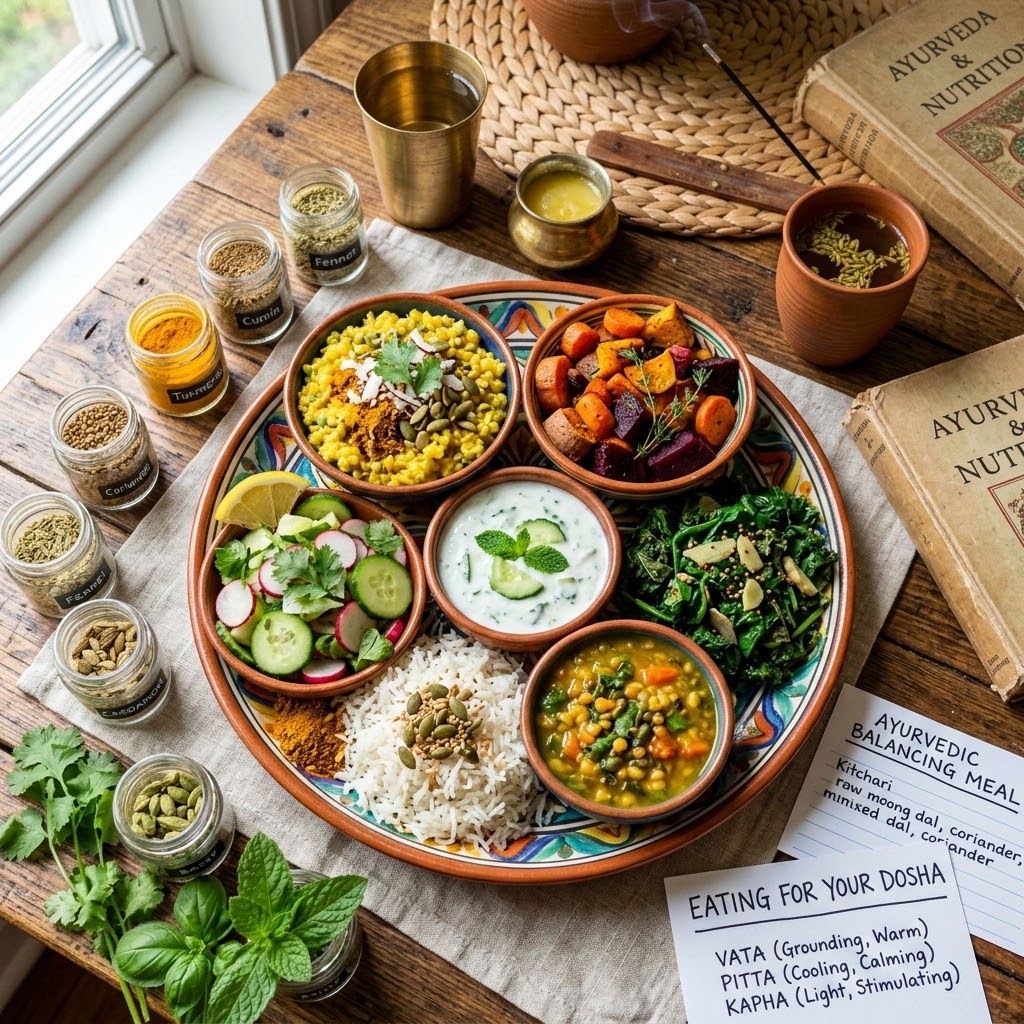
How to Eat for Your Dosha: A Beginner's Guide to Ayurvedic Nutrition
Learning to eat for your dosha is one of the most practical first steps into the world of Ayurvedic nutrition. As more people look for personalized, holistic approaches to wellness, Ayurveda offers a time tested framework that goes far beyond generic diet advice. Indeed, this ancient system recognizes that no single way of eating works for every body. Instead, it encourages you to understand your unique constitution and adjust your meals accordingly.
This guide walks through everything a beginner needs to know about eating for their dosha, starting with the foundational concepts of Ayurveda and moving toward specific, practical dietary guidance for each dosha type. Additionally, you will find tips on seasonal eating, digestive health, and a FAQ section that addresses common beginner questions. By the end, you will have a clear, actionable starting point for building your own Ayurvedic lifestyle.
What Does It Mean to Eat for Your Dosha?

Ayurveda, a holistic healing system that originated in India thousands of years ago, teaches that every person is made up of a unique combination of three energies, known as doshas: Vata, Pitta, and Kapha. Each dosha governs different physical and mental characteristics, and most people have one or two dominant doshas that shape their body type, digestion, energy levels, and emotional tendencies.
Learning to eat for your dosha means choosing foods and eating habits that support balance within your dominant dosha, rather than following a one size fits all diet. For instance, someone with a dominant Vata dosha may benefit from warm, grounding meals, while someone with a dominant Pitta dosha may thrive on cooling, less spicy foods. Consequently, Ayurvedic nutrition is highly individualized, which sets it apart from many modern diet trends that apply the same rules to everyone.
Moreover, this approach treats food as more than fuel. In Ayurveda, food is often described as medicine, since the right combination of ingredients can help restore balance, support digestion, and improve overall wellbeing. Therefore, understanding your dosha is not simply an academic exercise; it becomes a practical tool you can use at every meal.
Why Ayurvedic Nutrition and Eating for Your Dosha Matters

Understanding the benefits of Ayurvedic nutrition helps explain why this approach continues to gain popularity as part of a broader holistic lifestyle. Below are the key benefits, moving from general wellness advantages to more specific, practical ones.
1. Supports Digestive Health
Ayurveda places significant emphasis on digestion, often considering it the foundation of overall health. As a result, eating for your dosha can help reduce bloating, sluggishness, and other common digestive complaints by matching food choices to your body's needs.
2. Encourages a More Personalized Approach
Unlike restrictive diets that ignore individual differences, Ayurvedic nutrition adapts to your specific constitution. Therefore, it often feels more sustainable, since it works with your body rather than against it.
3. Aligns Naturally with Seasonal Eating
Additionally, Ayurveda encourages eating in harmony with the seasons, which supports the body's natural rhythms throughout the year. Consequently, seasonal eating becomes a natural extension of understanding your dosha.
4. Builds a Foundation for a Holistic Lifestyle
Finally, learning to eat for your dosha often serves as an entry point into a broader Ayurvedic lifestyle, one that includes mindful routines, stress management, and self care practices. In turn, this creates a more complete approach to wellness rather than focusing on food alone.
Understanding the Three Doshas: Vata, Pitta, and Kapha

Now that we have covered the broader philosophy, let us narrow the focus to the three doshas themselves. Each one carries distinct qualities that shape how a person should eat and live.
Vata Dosha
Vata is associated with air and space, and it governs movement, creativity, and communication. People with a dominant Vata dosha often have a lighter body frame, quick thinking, and a tendency toward dry skin or irregular digestion. A supportive Vata diet typically favors warm, moist, and grounding foods, such as cooked grains, root vegetables, and healthy fats, while minimizing raw, cold, or overly dry foods.
Pitta Dosha
Pitta is associated with fire and water, and it governs metabolism, digestion, and intellect. People with a dominant Pitta dosha often have a medium build, strong digestion, and a tendency toward irritability or inflammation when out of balance. A supportive Pitta diet generally favors cooling, mildly spiced foods, such as leafy greens, cucumbers, and sweet fruits, while reducing excessively spicy, oily, or acidic foods.
Kapha Dosha
Kapha is associated with earth and water, and it governs structure, stability, and immunity. People with a dominant Kapha dosha often have a sturdier build, steady energy, and a tendency toward sluggishness or weight gain when out of balance. A supportive Kapha diet typically favors light, warm, and stimulating foods, such as legumes, bitter greens, and warming spices, while limiting heavy, oily, or overly sweet foods.
Since most people carry a combination of two doshas, it helps to observe your own patterns over time rather than rigidly assigning yourself to a single category.
How to Discover Your Dominant Dosha

Once you understand the three doshas, the next step is identifying your own constitution. This section moves from general self reflection toward more specific tools you can use.
Take a Dosha Quiz
First, a simple dosha quiz can help you identify your dominant dosha based on physical traits, digestive patterns, and emotional tendencies. Many Ayurvedic practitioners and wellness educators offer these quizzes as an accessible starting point for beginners.
Observe Your Natural Tendencies
Additionally, pay attention to your body's natural patterns. For example, notice whether you tend to feel cold and anxious (Vata), warm and irritable (Pitta), or heavy and sluggish (Kapha) when you are out of balance. Over time, these observations often reveal a clearer picture than a single quiz result.
Consult an Ayurvedic Practitioner
Finally, for a more precise assessment, consider consulting a practitioner trained in Ayurvedic education. A trained professional can evaluate pulse, tongue, and other traditional diagnostic methods to offer a more personalized understanding of your dosha balance.
Practical Tips for Eating According to Your Dosha

With your dosha identified, the next step is applying that knowledge to your everyday meals. This section moves from general dietary principles to specific, practical tips.
Favor warm, cooked meals if you are Vata dominant. Soups, stews, and root vegetables help ground excess air and space energy.
Choose cooling, hydrating foods if you are Pitta dominant. Cucumbers, coconut, and mild herbs help balance excess fire energy.
Reach for light, warming foods if you are Kapha dominant. Steamed vegetables, legumes, and warming spices help counter excess heaviness.
Eat according to the seasons. Seasonal eating naturally supports whichever dosha tends to become imbalanced during that time of year, such as favoring warming foods in winter and cooling foods in summer.
Prioritize digestive health. Since digestion sits at the center of Ayurvedic nutrition, eating slowly, chewing thoroughly, and avoiding overly cold drinks with meals can meaningfully improve how well your body processes food.
By applying these principles consistently, you can begin to notice how eating for your dosha affects your energy, mood, and digestion over time.
Common Mistakes to Avoid When Eating for Your Dosha
Even motivated beginners occasionally run into a few common pitfalls. Below are mistakes to watch for as you build your Ayurvedic lifestyle.
Trying to fit a single, rigid category. Since most people carry a blend of doshas, forcing yourself into one strict category can feel discouraging. Instead, stay flexible and adjust based on your body's actual signals.
Ignoring digestive signals. Ayurveda places heavy emphasis on digestion, so overlooking symptoms like bloating or fatigue can undermine your progress. Therefore, treat digestive health as a central guide rather than an afterthought.
Overcomplicating the process early on. Beginners sometimes try to master every Ayurvedic principle at once. Instead, start with basic dosha awareness and seasonal eating before layering in more advanced practices.
Neglecting the broader Ayurvedic lifestyle. Food alone does not complete the picture. Consequently, incorporating rest, movement, and stress management alongside diet leads to more meaningful, lasting results.
Frequently Asked Questions About Eating for Your Dosha
1. What does it mean to eat for your dosha?
Eating for your dosha means choosing foods and eating habits that support balance within your dominant Ayurvedic constitution, whether that is Vata, Pitta, or Kapha.
2. How do I find out my dosha?
You can take a simple dosha quiz, observe your body's natural tendencies over time, or consult a practitioner trained in Ayurvedic education for a more personalized assessment.
3. Can I have more than one dominant dosha?
Yes, you can. Most people carry a combination of two doshas, which means your ideal diet may blend recommendations from more than one category.
4. Is Ayurvedic nutrition the same as a Vata, Pitta, or Kapha diet?
Not exactly. Ayurvedic nutrition is the broader system, while the Vata, Pitta, and Kapha diets are specific applications of that system based on your individual constitution.
5. Does seasonal eating play a role in Ayurveda?
Yes, it does. Seasonal eating supports whichever dosha tends to become imbalanced during a particular time of year, making it a natural extension of eating for your dosha.
6. Do I need to follow Ayurvedic nutrition perfectly to see benefits?
No, you do not. Even small, consistent adjustments, such as favoring warm meals if you are Vata dominant or cooling foods if you are Pitta dominant, can support noticeable improvements in digestion and energy over time.
Final Thoughts
Learning to eat for your dosha offers a personalized, holistic path toward better digestion, steadier energy, and a more balanced lifestyle overall. From understanding the philosophy behind Ayurveda to identifying your dominant dosha and applying practical dietary tips, this guide has moved from general principles toward specific, actionable steps. Ultimately, the goal is not perfection, but consistent awareness of how food affects your unique body and mind.
As you continue exploring Ayurvedic nutrition, remember that small, mindful choices, such as eating seasonally or paying closer attention to digestion, can build meaningfully over time. Therefore, start where you are, stay curious, and allow your understanding of your dosha to deepen naturally as you practice.
Ready to Deepen Your Ayurvedic Journey?

If you are ready to explore food as medicine and build a deeper understanding of Ayurvedic nutrition, The Culinary Alchemist by Chef Paul Seaman can help. Through hands on Ayurvedic education and guided cooking classes, The Culinary Alchemist supports beginners who want to turn Ayurvedic principles into everyday, sustainable habits.
Visit The Culinary Alchemist today and take the next step toward eating for your dosha with confidence.


