
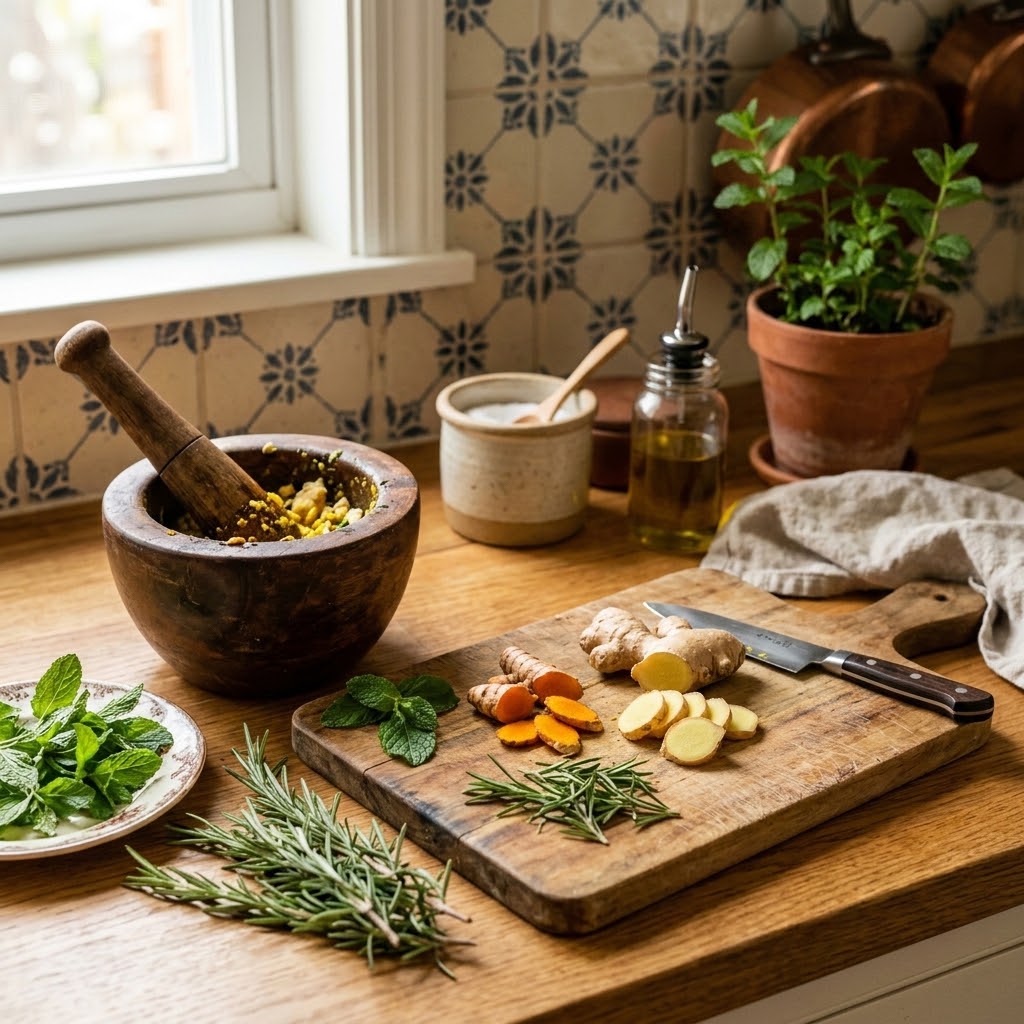
Food as Medicine: 7 Everyday Kitchen Herbs That Support Health
Food as medicine is not a new idea. Long before modern pharmaceuticals existed, people relied on everyday kitchen herbs to support digestion, ease inflammation, and maintain overall wellness. As interest in natural remedies and holistic health continues to grow, many home cooks are rediscovering the healing potential hiding in their own spice racks. Indeed, the herbs sitting in your kitchen right now may already be doing more for your health than you realize.
This guide explores the concept of food as medicine through the lens of Western herbalism, moving from the broader philosophy behind healing herbs toward seven specific kitchen herbs you can start using today. Additionally, you will find practical tips for incorporating these herbs into everyday meals, along with a FAQ section that addresses common questions about herbal medicine and natural remedies.
What Does "Food as Medicine" Really Mean?

The phrase food as medicine describes the practice of using everyday ingredients, particularly culinary herbs and spices, to support the body's natural healing processes. Rather than treating food and medicine as separate categories, this philosophy recognizes that many common kitchen herbs contain compounds that actively support digestion, reduce inflammation, and strengthen immunity.
This idea sits at the core of Western herbalism, a tradition that has used plants and herbs for medicinal purposes across Europe and North America for centuries. Long before refrigeration and modern medicine, herbs like thyme and sage were valued not only for flavor but also for their antimicrobial and digestive properties. Consequently, many of the herbs already found in a typical spice cabinet carry a long history of medicinal use that predates their modern culinary role.
Moreover, the food as medicine approach does not require replacing conventional medical care. Instead, it encourages a complementary mindset, one where everyday meals become an opportunity to support health alongside, rather than instead of, professional medical guidance. Therefore, incorporating healing herbs into your cooking can be a simple, accessible way to support wellness without dramatically changing your diet.
Why Culinary Herbs Matter for Everyday Health

Understanding why culinary herbs matter helps explain why the food as medicine philosophy has remained relevant for so long. Below are the key reasons, moving from general wellness benefits to more specific, practical ones.
1. They Support Digestive Health
Many culinary herbs contain compounds that aid digestion, reduce bloating, and soothe the digestive tract. As a result, adding the right herbs to a meal can help the body process food more comfortably.
2. They Offer Anti-Inflammatory Benefits
Additionally, several common kitchen herbs contain antioxidants and anti-inflammatory compounds that may help reduce everyday inflammation. Therefore, regularly cooking with these herbs can support long term wellness in a gentle, sustainable way.
3. They Provide Natural, Accessible Remedies
Since these herbs are already part of most kitchens, they offer a natural remedy option that does not require special sourcing or expensive supplements. Consequently, food as medicine remains one of the most accessible entry points into holistic health.
4. They Connect Flavor with Function
Finally, culinary herbs allow you to support your health without sacrificing flavor. In turn, this makes healthy eating feel less like a restriction and more like an enjoyable, sustainable habit.
7 Everyday Kitchen Herbs That Support Better Health

Now that we have covered the broader philosophy, let us narrow the focus to seven specific herbs that exemplify the food-as-medicine approach. Each one offers distinct health benefits alongside its culinary uses.
1. Ginger
Ginger has long been used to support digestion and ease nausea. Its warming, slightly spicy flavor works well in soups, stir-fries, and teas, making it one of the easiest medicinal herbs to incorporate into daily cooking.
2. Turmeric
Turmeric contains curcumin, a compound widely studied for its anti-inflammatory properties. Since its flavor is earthy and slightly bitter, it pairs well with rice dishes, soups, and roasted vegetables.
3. Peppermint
Peppermint is well known for soothing digestive discomfort and easing bloating. Additionally, its refreshing flavor makes it a popular choice for teas, salads, and cold beverages.
4. Rosemary
Rosemary contains antioxidants that may support brain health and reduce inflammation. Its woody, aromatic flavor pairs naturally with roasted meats, potatoes, and bread.
5. Thyme
Thyme has traditionally been used to support respiratory health and ease coughs. Because of its earthy, versatile flavor, it works well in soups, stews, and roasted dishes.
6. Fennel
Fennel seeds are often used to support gut health and reduce bloating after meals. Its slightly sweet, anise like flavor makes it a common addition to soups, breads, and roasted vegetables.
7. Sage
Sage has a long history of use in supporting digestion and soothing sore throats. Its bold, slightly peppery flavor pairs especially well with poultry, squash, and butter based sauces.
Since each of these herbs offers a distinct set of benefits, rotating them throughout your weekly meals can provide a broader range of support for digestion, inflammation, and overall wellness.
How to Start Using These Herbs as Everyday Medicine

Once you are familiar with these seven herbs, the next step is learning how to incorporate them into your regular cooking. This section moves from general strategies to specific, practical tips.
Start with One Herb at a Time
First, choose one herb that addresses a specific need, such as ginger for digestion or turmeric for inflammation, and incorporate it into a dish you already cook regularly. This makes the transition feel manageable rather than overwhelming.
Pair Herbs with Complementary Ingredients
Additionally, pairing herbs thoughtfully enhances both flavor and function. For instance, combining turmeric with black pepper improves the body's ability to absorb curcumin, while pairing peppermint with lemon creates a refreshing, digestion friendly tea.
Use Both Fresh and Dried Forms
Similarly, both fresh and dried herbs offer health benefits, though their potency and best uses differ slightly. Fresh herbs work well as finishing touches, while dried herbs hold up better during longer cooking times such as soups and stews.
Build a Rotation, Not a Routine
Finally, rather than relying on a single herb every day, build a simple rotation throughout the week. As a result, your meals stay interesting while your body receives a wider range of supportive compounds over time.
Common Mistakes to Avoid
Even with simple, accessible herbs, a few common mistakes can limit their benefits. Below are pitfalls to watch for as you build your food as medicine practice.
Using too little of the herb. Many people add herbs sparingly for flavor alone. Instead, use a more generous amount when aiming for a therapeutic effect, within reasonable culinary limits.
Overcooking delicate herbs. As mentioned earlier, herbs like peppermint lose potency when cooked too long. Therefore, add delicate herbs toward the end of cooking or use them fresh.
Relying on old, stale dried herbs. Dried herbs lose their beneficial compounds over time. Consequently, replace them every six to twelve months to maintain their full effect.
Expecting immediate, dramatic results. Food as medicine works gradually and gently. Instead of expecting instant results, focus on consistent, everyday use for long term benefits.
By avoiding these mistakes, you can more effectively incorporate healing herbs into your daily routine and support your health in a sustainable, enjoyable way.
Frequently Asked Questions About Food as Medicine
1. What does "food as medicine" mean?
Food as medicine refers to the practice of using everyday ingredients, especially culinary herbs, to support the body's natural digestion, immunity, and inflammation response.
2. Are these herbs safe to use every day?
In typical culinary amounts, these herbs are generally considered safe for most people. However, anyone with a medical condition or who takes medication should consult a healthcare provider before significantly increasing herb intake.
3. Can herbs replace medical treatment?
No, they cannot. Food as medicine works best as a complementary practice alongside professional medical care, not as a replacement for it.
4. Which herb is best for digestion?
Ginger, peppermint, and fennel are among the most widely used herbs for supporting digestive health and easing bloating.
5. Do dried herbs offer the same benefits as fresh herbs?
Yes, for the most part. Dried herbs retain many beneficial compounds, though fresh herbs are often slightly more potent and better suited for finishing dishes.
6. How can I start incorporating these herbs into my meals?
Begin with one herb that addresses a specific need, add it to a dish you already cook regularly, and gradually build a rotation that includes several of the seven herbs discussed in this guide.
Final Thoughts
Food as medicine offers a simple, accessible way to support everyday health using ingredients you likely already have in your kitchen. From understanding the philosophy behind Western herbalism to exploring seven specific healing herbs and learning how to use them effectively, this guide has moved from general principles toward practical, everyday application. Ultimately, the goal is consistency rather than perfection, allowing these herbs to gently support your health over time.
As you continue exploring food as medicine, remember that small, consistent choices, such as adding turmeric to a weeknight dinner or brewing a cup of peppermint tea after a meal, can build into meaningful, lasting habits. Therefore, start with one herb, stay curious, and let your kitchen become a source of both flavor and everyday wellness.
Ready to Explore Food as Medicine Further?

If you are ready to deepen your understanding of healing herbs and holistic nutrition, The Culinary Alchemist by Chef Paul Seaman can help. Through hands on Ayurvedic education and practical culinary guidance, The Culinary Alchemist supports home cooks who want to bring the food as medicine philosophy into their everyday meals.
Visit The Culinary Alchemist today and start turning your kitchen into a source of everyday healing.


